LVP, Laminate or Hardwood? Choosing Flooring for a High-Traffic Home
Kids, dogs, humidity and a hallway that never rests. Here's how the major flooring materials actually hold up — and where each one belongs.
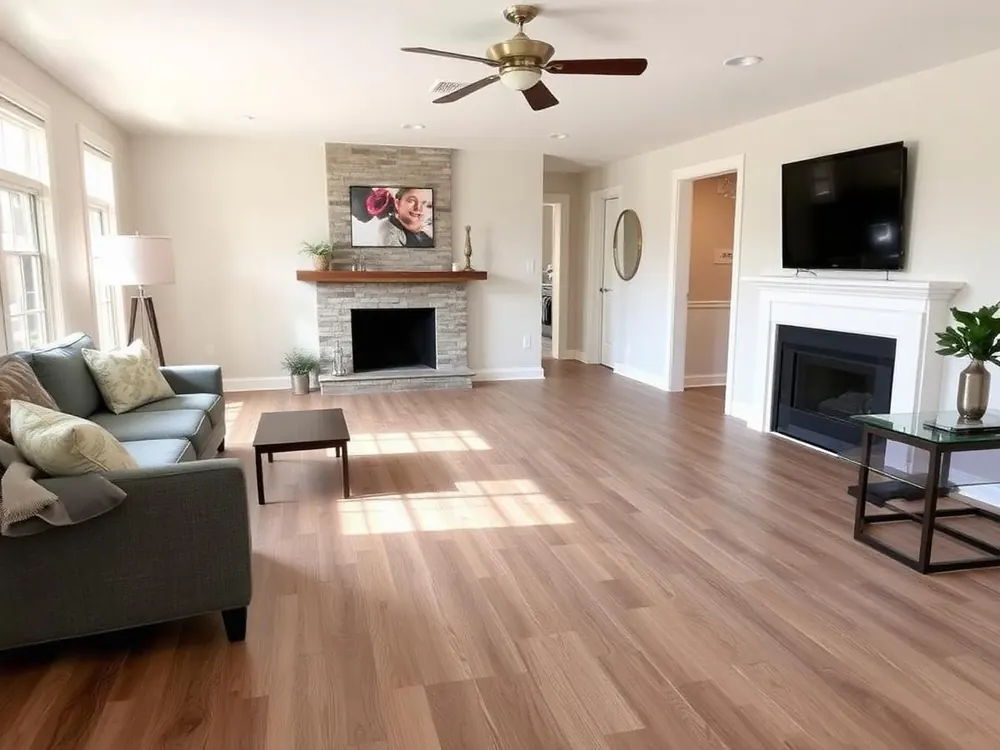
Flooring is the largest continuous surface in a home, which means it drives both the look of the space and the maintenance load for the next decade. The right answer depends less on taste than on three things: moisture, traffic and subfloor condition.
Luxury vinyl plank (LVP)
LVP is waterproof, dimensionally stable and forgiving of the temperature swings we get across the Triad and southern Virginia. For families with pets, for basements, and for rental turnovers, it's usually the default recommendation. The variable that matters is wear-layer thickness — 12 mil is fine for a low-traffic bedroom, 20 mil and up is what belongs in a hallway or a rental.
Laminate
Modern laminate has a very hard wear surface and often looks sharper than LVP in wide-plank formats. It handles scratches better and standing water worse. Good for living rooms and bedrooms; we don't put it in bathrooms or laundry rooms.
Hardwood
Want this priced for your home?
Free, no-pressure estimate from the crew that does the work.
Nothing else refinishes. That single property is why hardwood still wins on resale in older Winston-Salem and Greensboro homes — a floor that can be sanded three times over its life is a different asset than one that gets replaced. It needs a stable, dry substrate and a household willing to manage humidity.
Tile and carpet
- Tile: the most durable and most moisture-proof option, and the most sensitive to subfloor deflection. A bouncy floor cracks grout.
- Carpet: still the right call for bedrooms, stairs and sound control. In rentals, choose a mid-grade with a good pad rather than the cheapest roll — it survives two tenancies instead of one.
The part nobody quotes: subfloor prep
Every flooring failure we're called to repair traces back to what was underneath. Flatness tolerance, moisture testing on slabs, squeak correction and transition heights are the difference between a floor that reads as new in five years and one that telegraphs every seam by month six.
Ask any flooring bid what it includes for subfloor prep and moisture testing. If the answer is nothing, the number isn't comparable.